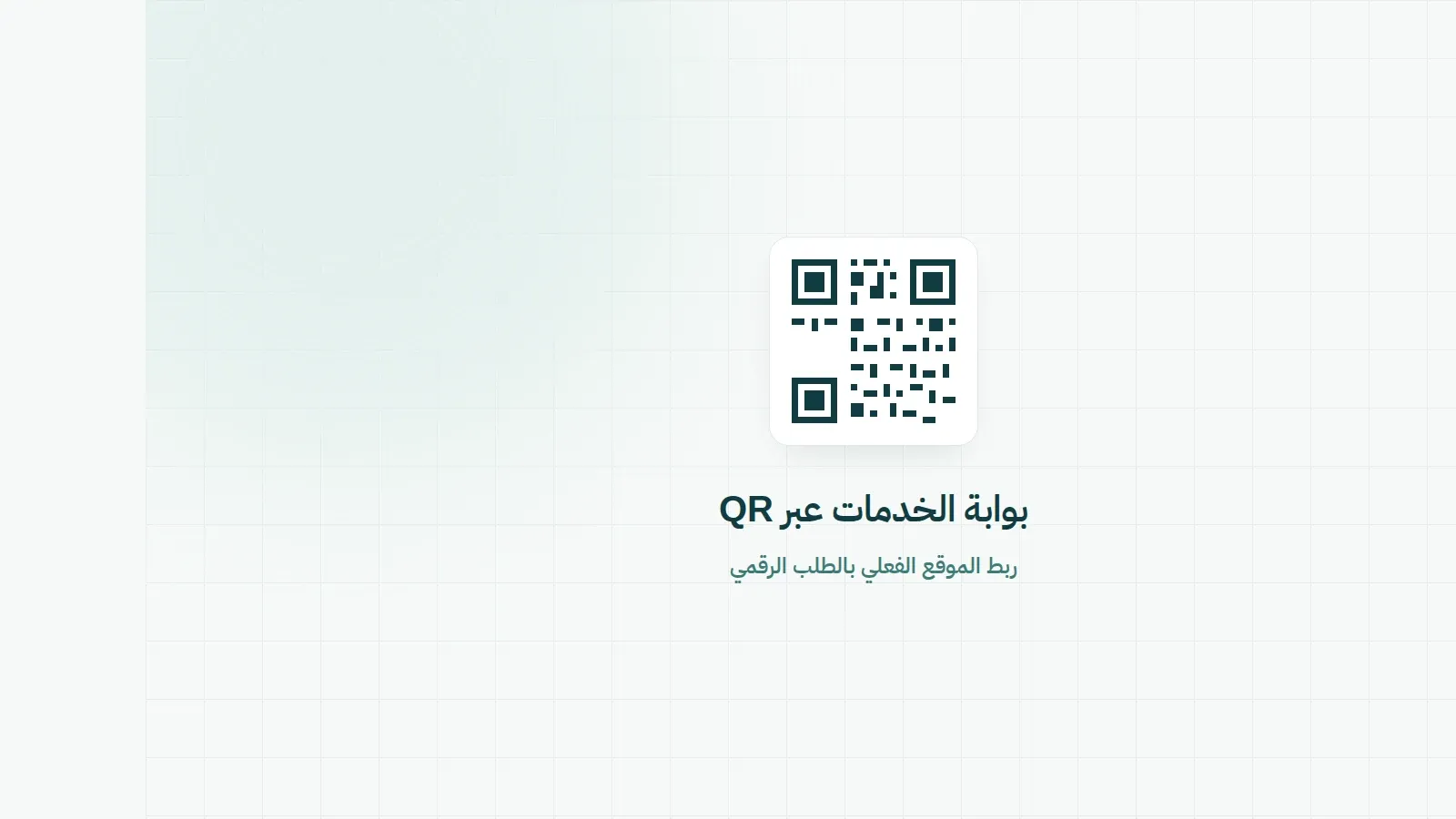
QR Services Gateway | Linking the Location to the Digital Service
- Location
- Saudi Arabia
- Period
- 2026
- Status
- In preparation
- Role
- Designing the operational concept and linking the physical location to the digital request
Overview
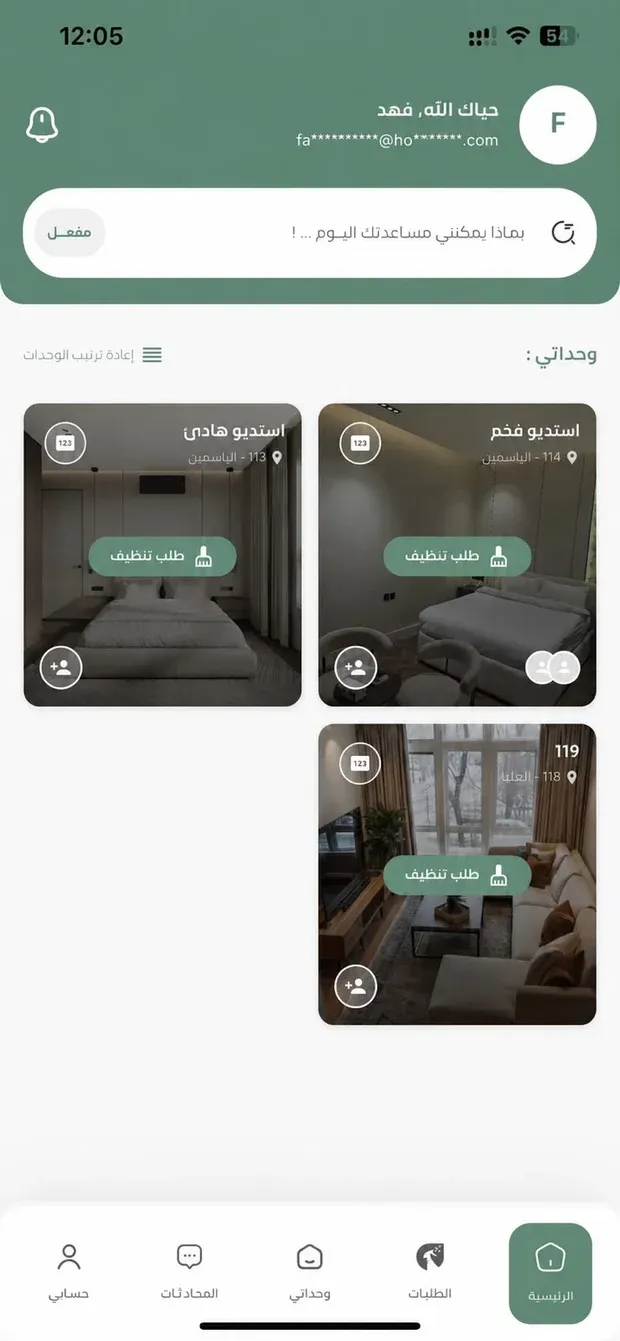
An operational concept for a services gateway via a fixed QR code within Faculty Members Housing at Imam Mohammad Ibn Saud Islamic University: the code is fixed at the resident's physical location, so they scan it and reach the soft service request directly, the request is created linked to their location automatically, and it is then routed to the relevant service channel with the ability to follow up.
Within the multi-building, multi-unit Faculty Members Housing, what most slows a soft service request is not its execution but the identification of its location: which building, which unit, which floor. The resident describes their location in text, the receiving party re-specifies it, and steps and accuracy are lost before work even begins. The fixed QR code solves exactly this gap: the resident's location is known because the code itself is fixed there.
I present this initiative as an operational concept I designed within Faculty Members Housing, not an implemented system. Its value is not in the technology — a QR code is a well-known tool — but in the idea behind it.
The real problem is not the request
In a single unit, requesting a service is easy. In housing with multiple buildings, floors, and units, the hardest step becomes for the system to know exactly where the resident is. Describing it in text is slow and error-prone.
Why a fixed code
The code fixed in the resident’s unit carries its location within itself. When the resident scans it, a location-specific request is created without them writing a single letter about where they are. This small step — eliminating manual location identification — is the essence of the initiative, and everything after it is built upon it.
Responsibility
My role
- Designing the operational concept of the gateway.
- Linking the physical location to the digital request without manual entry.
- Defining the request routing and follow-up path.
Handling
Challenges & actions
Each challenge is linked directly to the action taken and its operational impact.
Challenge
Identifying the location manually slows the request and introduces errors.
Action
Linking each code to its physical location in advance, so the request is created location-specific from the moment of the scan.
Impact
Eliminating the location identification step entirely and reducing errors.
Challenge
The multiplicity of request channels fragments follow-up.
Action
Routing every request to the relevant service channel through a single, trackable path.
Impact
Clarity of the request path from its creation to its closure.
Summary
Lessons learned
01
The simplest improvement in a service may lie in defining the request rather than executing it.
02
Linking the location to the code physically is more accurate than any manual entry of the location.