Central Chilled-Water Plant Optimization | Conversion to Variable-Frequency Drives (VFD)
- Location
- Riyadh
- Period
- 2026
- Status
- In progress
- Role
- Leading the engineering analysis, defining the conversion scope, and supervising operation
Overview
Converting the central chilled-water plant motors to variable-frequency drives (VFD), optimizing the operating strategies of the chilled-water system, and tracking performance through periodic efficiency indicators.
Fixed-speed motors run at full capacity regardless of the actual load, while chilled-water plants operate most of their hours at partial load far below the design load. This gap between what the system needs and what it actually consumes is the largest source of waste in any central chilled-water plant.
The chilled-water plant is the consumption heart of any large facility. Any percentage point gained in its efficiency shows directly at the level of the entire facility.
The gap between design and operation
A fixed-speed motor runs at full capacity whether the system needs it or not. But a chilled-water plant rarely operates at its design load; most of its hours fall under partial load. A variable-frequency drive makes consumption follow need instead of following installed capacity.
Conversion alone is not enough
The common mistake is to treat installing a VFD as a measure that ends at commissioning. Its real effect only emerges after the operating strategy itself is reviewed, so that setpoints are built on the actual load. Without this review, a large part of the opportunity remains unrealized.
Responsibility
My role
- Leading the engineering analysis of the cooling system's performance and identifying optimization opportunities.
- Defining the VFD conversion scope and its priorities based on runtime hours and load.
- Reviewing the operating strategy and aligning it with the actual load after conversion.
- Building periodic efficiency indicators that compare current performance against the baseline.
- Coordinating with maintenance teams on corrective actions when a deviation appears.
Execution
Project phases
01
Actual load analysis
Measuring the load curve throughout operation and comparing it against the design load, to determine the actual proportion of runtime hours that fall under partial load.
Role: Leading the analysis and defining the scope of the opportunity before any investment decision.
Outcome: A conversion decision built on a documented load curve rather than a design assumption.
02
VFD conversion and operation
Converting the targeted motors to variable-frequency drives and reviewing the operating strategy so that speed follows the actual load instead of running at a fixed point.
Role: Supervising the conversion and reviewing the operating strategy afterward.
Outcome: Operation that tracks the actual load instead of always running at full capacity.
Handling
Challenges & actions
Each challenge is linked directly to the action taken and its operational impact.
Challenge
Operating according to the design load while most actual operation falls under partial load.
Action
Converting to variable-frequency drives and aligning the operating strategy with the real load curve.
Impact
Consumption proportional to actual need instead of fixed at maximum capacity.
Challenge
Efficiency declining gradually without a clear alarm in daily operation.
Action
Adopting a periodic efficiency indicator that compares current performance against the baseline.
Impact
Detecting deviation early before it turns into a fault or excess consumption.
Summary
Lessons learned
01
Motor capacity is defined by the design load, but consumption is defined by the actual load — and the gap between them is the entire optimization space.
02
Conversion to VFD does not deliver its full effect if the operating strategy remains as it was before.
03
What is not measured periodically deteriorates without being noticed.
On-site
Photo gallery
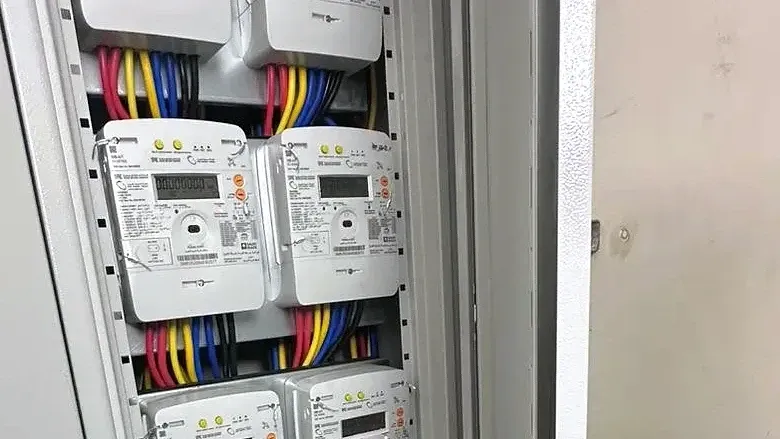
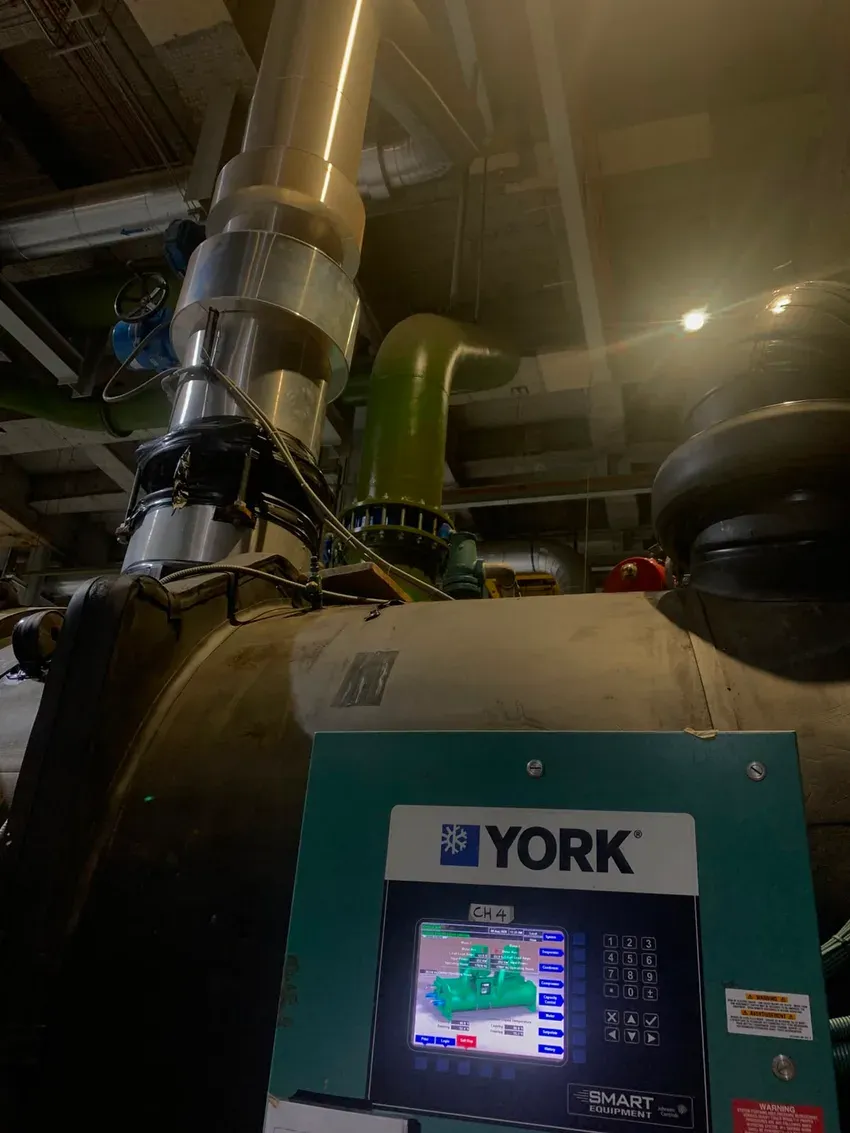
The control panel of one of the chillers during operation.