Smart Lighting Control | Cutting Unnecessary Runtime Hours
- Location
- Riyadh
- Period
- 2026
- Status
- In progress
- Role
- Designing control strategies and supervising implementation
Overview
Designing and implementing smart lighting control strategies that raise operational efficiency and reduce consumption without affecting the required illuminance levels.
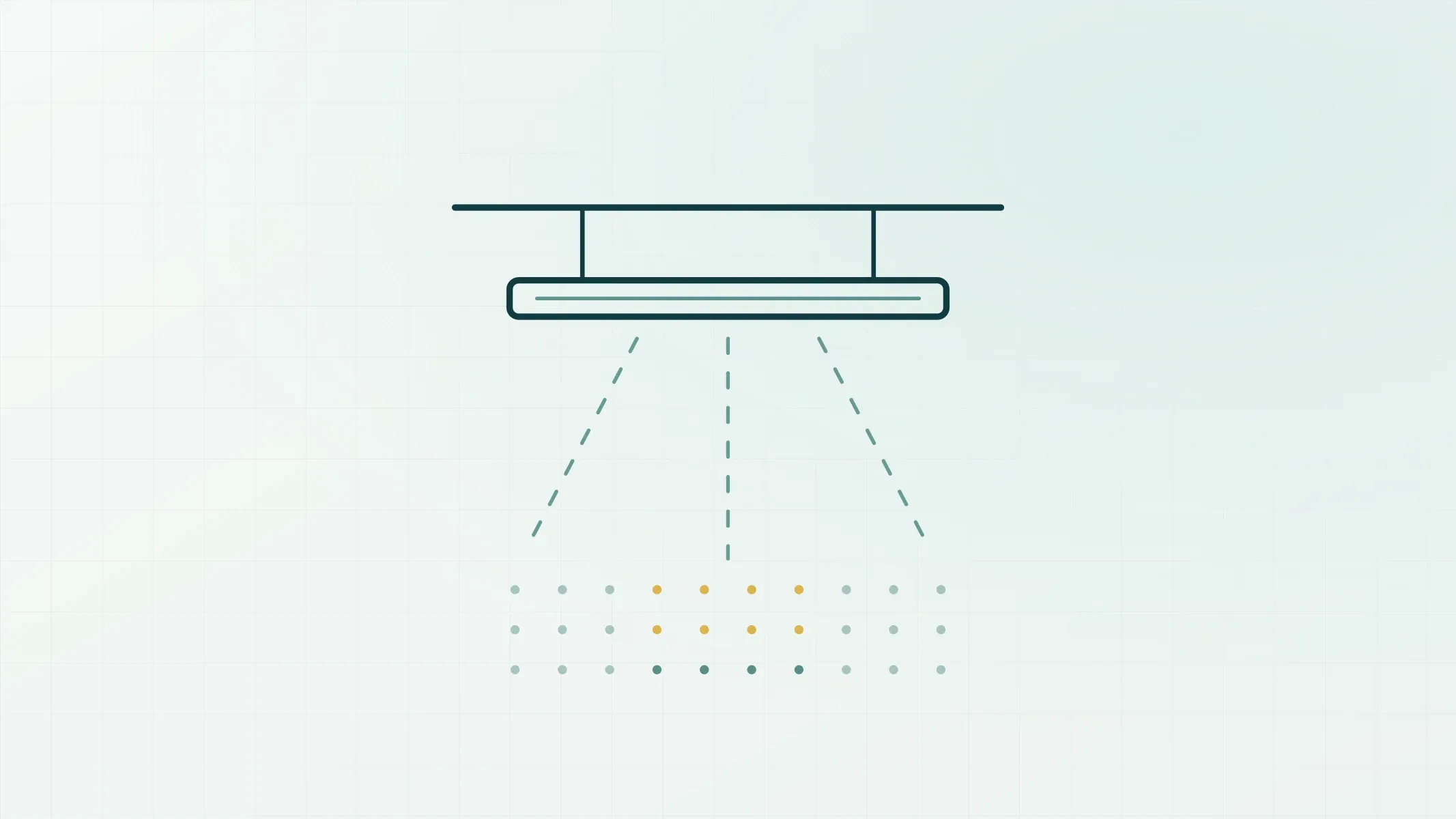
Upgrading lighting fixtures reduces consumption per fixture, but it does not address lighting operating in empty spaces or when sufficient daylight is present. Smart control is what completes the effect of the upgrade.
Replacing a fixture reduces what it consumes per hour. Smart control reduces the number of hours itself. The real effect comes from both together.
Responsibility
My role
- Designing the control logic for each space type.
- Defining target illuminance levels and response criteria.
- Providing engineering supervision of implementation and verifying the results.
Handling
Challenges & actions
Each challenge is linked directly to the action taken and its operational impact.
Challenge
Differing control needs across corridors, classrooms, and outdoor spaces.
Action
Designing an independent control logic for each space type instead of a unified strategy.
Impact
An appropriate response for each environment without affecting usage.
Summary
Lessons learned
01
Upgrade and control are complementary measures: the first reduces a fixture's consumption, and the second reduces its runtime hours.